
When modern design emerged between the 1920s and 1930s, it did more than just change the shape of objects; it transformed the way materials and functions interacted. During this epochal transition, leather assumed a central and irreplaceable role.
The Modern Movement sought simplicity, visible structure, and constructive honesty. Tubular steel, glass, and concrete became the new protagonists. However, these innovative materials often felt cold and industrial, sometimes distant from the domestic experience. Leather entered the scene as a balancing element, introducing warmth, tactility, and visual depth.
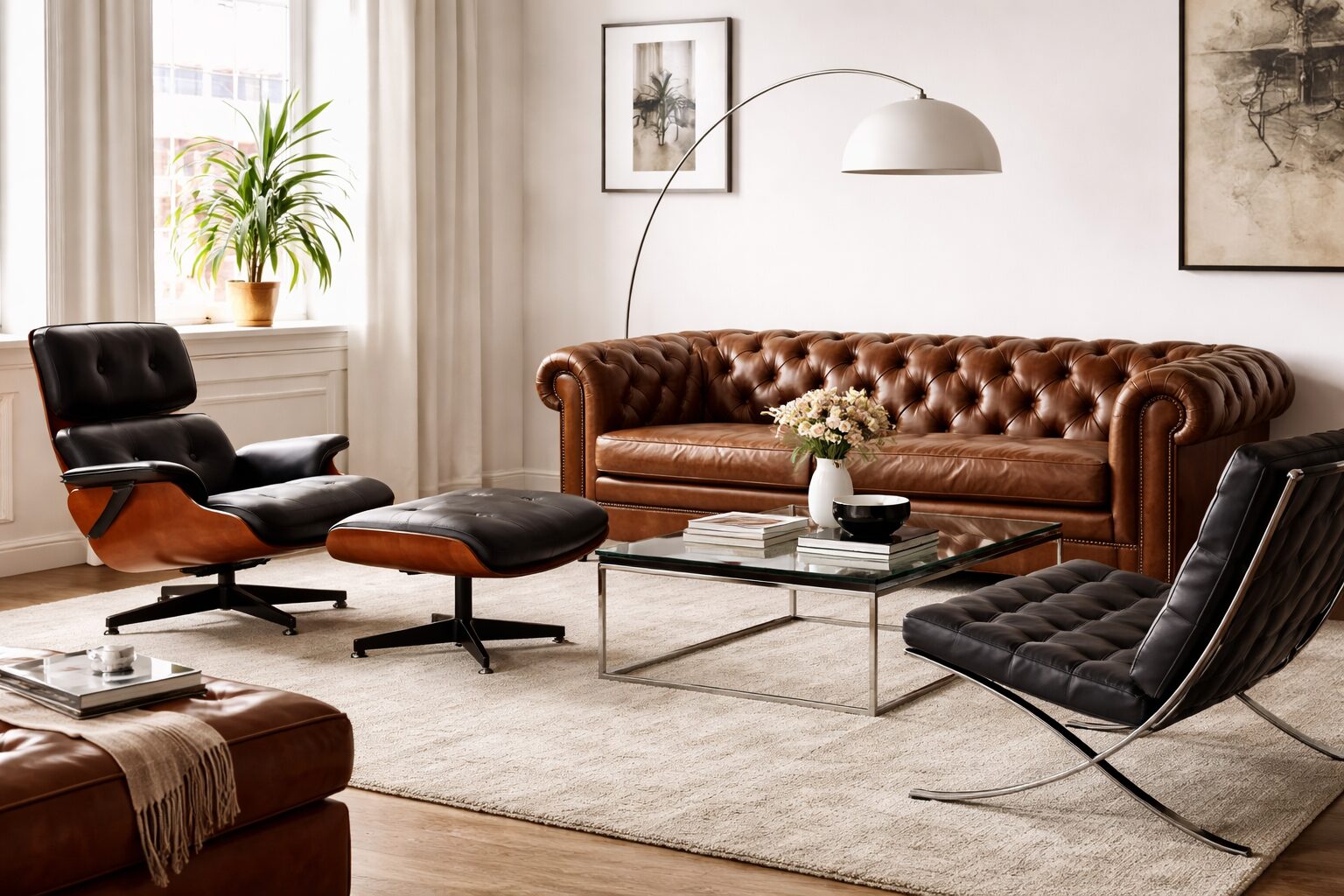
An iconic example: the LC2 armchair by Le Corbusier
A prime example is the LC2 armchair designed by Le Corbusier. In this piece, the metal structure no longer conceals the frame but makes it the focal point. The padded volumes upholstered in leather appear to be "contained" by the steel.
The contrast between the rigidity of the metal and the softness of the leather lies at the heart of the design. Without leather, the object would be incomplete, losing its essential human dimension. In design, leather is never a mere covering; it is a surface that interacts with light, absorbing and reflecting it throughout the day.
Leather in Scandinavian and Italian design
Unlike synthetic fabrics, leather enhances volume thanks to its natural micro-variations. This characteristic has been interpreted differently by the major international design schools:
- Scandinavian design: leather is often paired with light-colored woods, creating a balance between Nordic rigor and organic warmth.
- Post-war Italian design: leather symbolizes sophisticated yet restrained elegance—not ostentation, but intrinsic quality.
Aesthetic longevity and the test of time
There is also a fundamental temporal aspect: many leather design classics are still in production decades later. Leather contributes significantly to the aesthetic longevity of an object.
A leather sofa ages with dignity, gaining character over time, whereas synthetic coverings tend to quickly show signs of wear and the passage of time. The use of leather in great classics is not about nostalgia; it is proof that the right material can make a design project truly timeless.