
Two leathers in exactly the same shade can look surprisingly different. Why? Because the colour we perceive depends on more than pigment alone.
Grain, finish and light all help determine the final appearance of leather used in furniture and marine interiors.
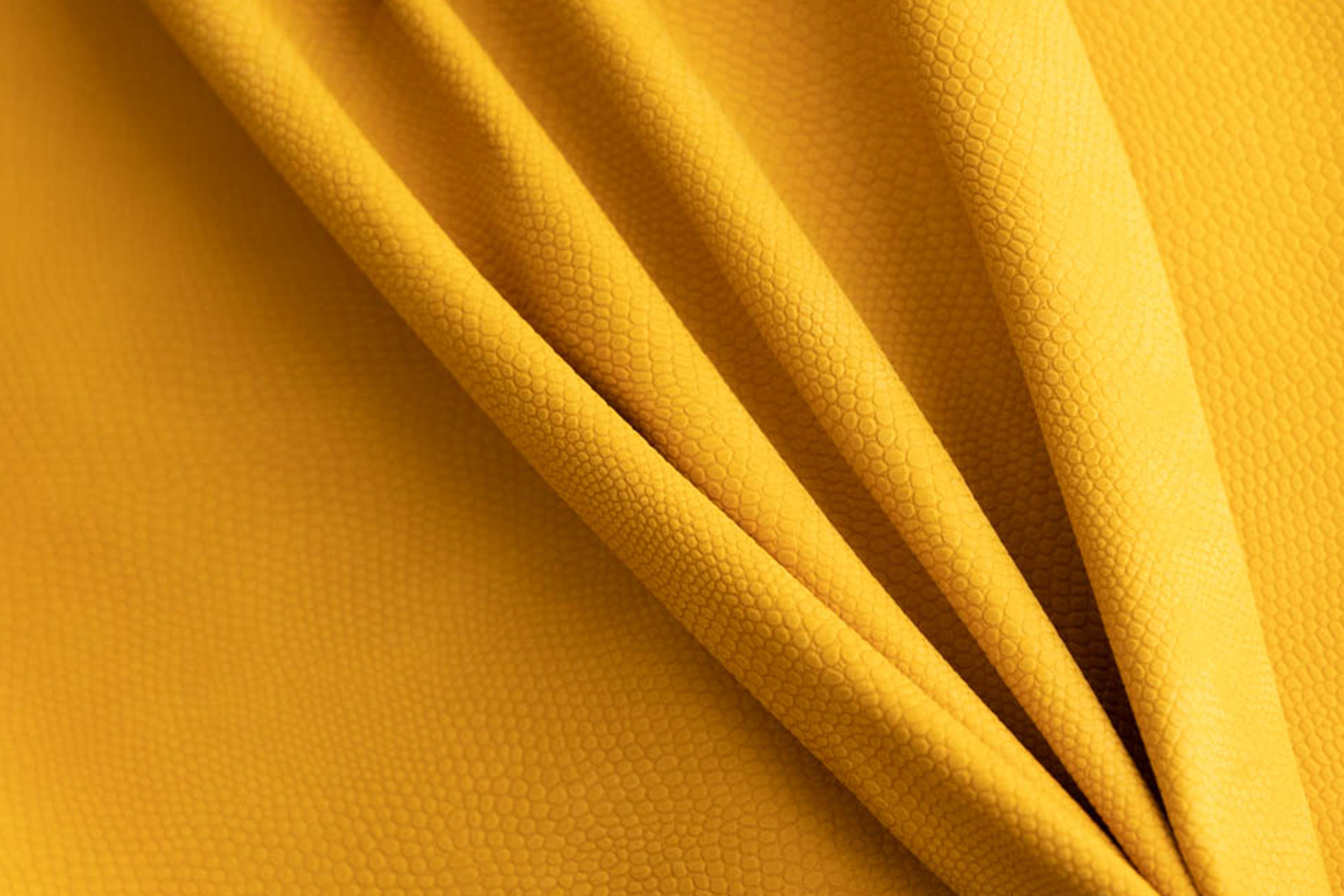
How Grain Changes Our Perception of Colour
Smooth leather reflects light differently from leather with a more pronounced grain. On textured surfaces, tiny irregularities create areas of light and shadow that give the colour greater depth.
This is why the same beige, brown or blue can take on an entirely different character depending on the type of leather it is applied to.
The Finish Makes a Difference, Too
A matte surface scatters light more evenly, generally making the colour appear more uniform. A glossier finish, by contrast, creates reflections that shift with the viewing angle.
Ambient lighting also plays a part. Natural light, warm lighting and cool lighting can all change how we perceive the very same shade.
This is particularly relevant in yacht interiors: during the day, leather may be illuminated by natural light, including light reflected off the water, while in the evening artificial lighting can bring out different nuances.
Choosing Leather Means Choosing More Than a Colour
When selecting leather for a furniture or marine interior project, the colour code is only the starting point.
Colour, grain, finish and light work together to shape the appearance of the upholstered surface.
That is why seeing and touching a leather sample remains essential. Colour is not simply something to look at. On leather, it comes to life.