
Distinguishing superior quality leather from a mediocre product requires careful observation and attention to detail. It is not just about aesthetics; it is about knowing how to read the signals the material sends through our senses. Here are the five fundamental criteria for evaluating leather excellence.
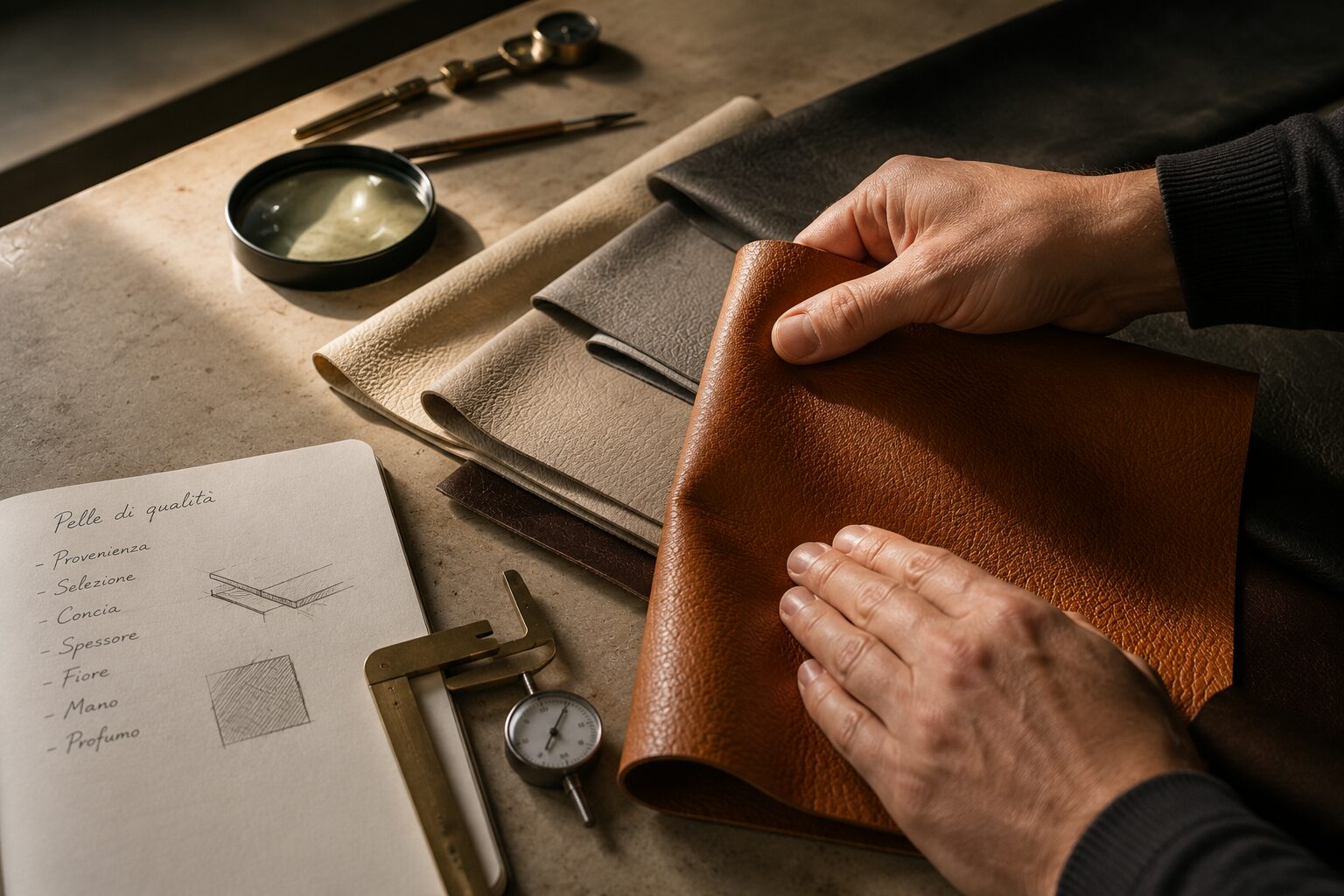
1. Surface analysis: imperfection as a mark of value
High-quality leather is never perfectly uniform. The presence of small variations in the grain, light veining, or tiny healed scars are unmistakable signs of authenticity. Conversely, an excessively regular, almost "printed" appearance may suggest significant surface correction made to cover flaws in the hide, sacrificing the material's natural character.
2. The touch: softness and consistency
To the touch, premium leather should feel soft yet firm. It should convey a sense of natural warmth. If the surface feels stiff, cold, or overly "plasticized," it likely has a very thick surface coating that limits both its breathability and its tactile appeal.
3. Elasticity and pressure reaction test
Elasticity is a very effective technical test. When lightly pressing a finger onto the surface, high-quality leather should react by forming small natural wrinkles that disappear as soon as the pressure is released. If the leather springs back to its original shape without leaving permanent marks or rigid creases, it means the internal fiber structure is intact and healthy.
4. The smell: the scent of authenticity
The scent of natural leather is unmistakable: it is a warm, organic, and inviting aroma. A chemical, plastic, or artificial odor is often an indication of synthetic materials or tanning treatments that are too intensive and disrespectful of the raw material. The sense of smell is one of the strictest and most accurate judges when choosing luxury furniture.
5. Thickness and backing examination
Looking at the backing (the "split") and the thickness of the cut can reveal a lot about the fiber structure of the material. Leather that is too thin may have less mechanical resistance over time. Quality is always the result of rigorous raw material selection, combined with tanning expertise and meticulous quality checks throughout the supply chain.
Ultimately, recognizing good leather means developing a personal sensitivity. It is an exercise in material education that transforms a simple purchase into a conscious choice.